
Retrenchment in Singapore: The 2026 Employer Compliance Guide
26 Jul 2026
12
mins read
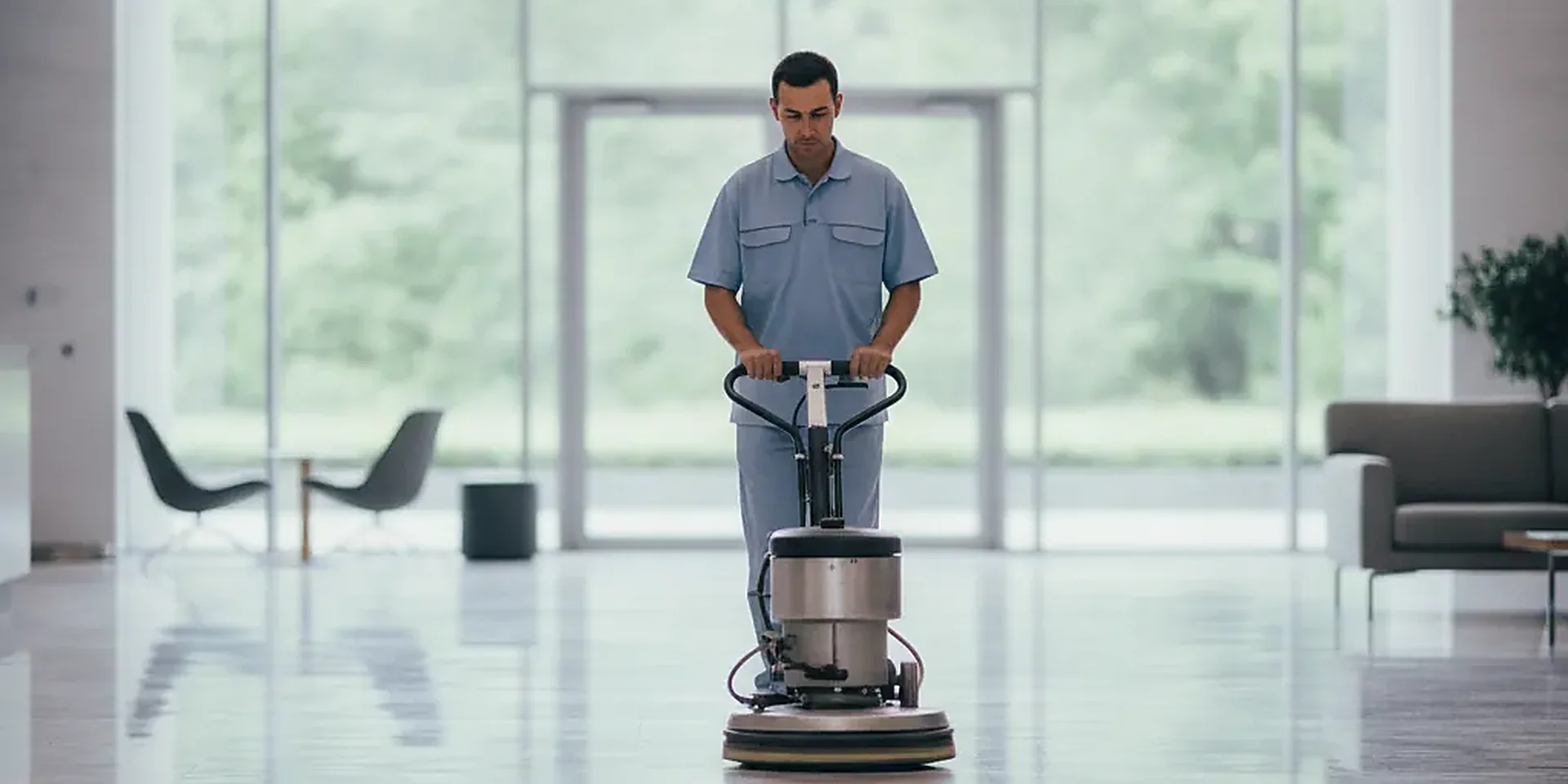
On 1 July 2026, the mandatory wage floors under Singapore's Progressive Wage Model (PWM) for the cleaning sector stepped up again. An entry-level general cleaner at an office or commercial site must now be paid at least S$2,080 a month, up from S$1,910 the year before, and the ladder keeps climbing through 2028. If your business employs resident cleaners, or simply hires a cleaning contractor for your premises, this change affects you, and the obligations are legal, not optional.
This guide breaks down the 2026 wage ladder in full, explains the mandatory PWM Bonus and training requirements, and clarifies a point many companies miss: buyers of cleaning services carry compliance risk too. You will leave with a practical checklist for staying on the right side of the rules.
The cleaning sector was the very first industry to adopt a mandatory Progressive Wage Model, and its wage schedule is reviewed and stepped up on a fixed calendar. Adjustments take effect on 1 July each year, which is why mid-year is the critical compliance date for cleaning employers rather than 1 January.
For the period 1 July 2026 to 30 June 2027, the baseline monthly wage for an entry-level general cleaner (or indoor cleaner) in Group 1 — office and commercial sites such as offices, schools, hospitals, clinics and condominiums — is S$2,080. That is a S$170 increase on the S$1,910 floor that applied in the previous 12 months.
Crucially, this is a floor, not a target. It is the minimum basic wage an employer must pay a Singapore citizen or permanent resident cleaner at that job level. Basic wage here excludes overtime, bonuses, allowances and employer CPF contributions, so the actual gross cost to the employer sits above the headline figure.
Key insight: The PWM sets a basic wage floor by job level. The number on the pay ladder is not the total employment cost — layer on CPF, the mandatory PWM Bonus, overtime and any allowances to understand your true monthly spend per cleaner.
The cleaning PWM does not set a single minimum wage. It defines a career ladder in which each rung — tied to skills, responsibility and training — carries its own wage floor. As cleaners upskill and take on more responsibility, employers must move them up the ladder.
The floors below apply to Group 1 (office and commercial sites) outsourced cleaners working full time (35 to 44 hours per week), shown as the previous year, then the new 1 July 2026 rate, then the two increases already scheduled after that:
The cleaning PWM splits jobs into three groups, and the wage floors differ by setting. Group 2 covers food and beverage establishments such as hawker centres, food courts and restaurants; a table-top cleaner there has a floor of S$2,180 for the July 2026 period, while a general cleaner matches the Group 1 entry rate of S$2,080. Group 3 covers conservancy work — town councils and public cleansing — where floors run higher; a Class 4/5 truck driver reaches S$3,040 from 1 July 2026.
In-house cleaners (those employed directly by a firm rather than through an outsourced contractor) follow their own parallel ladder that mirrors these levels. If you employ cleaners in-house because your company hires foreign workers, the same mandatory floors apply to your local cleaning staff.
The cleaning sector is only one of several industries with a mandatory PWM. If your business also operates in food and beverage or retail, our companion guides to the food services PWM and the retail PWM cover the wage ladders and deadlines for those sectors.
Here is the part many Singapore employers overlook. You do not need to have a single cleaner on your payroll to be exposed to the cleaning PWM. If your company engages a cleaning contractor for your office, retail unit, factory or F&B outlet, you are a buyer of cleaning services, and that carries its own obligations.
Under the Environmental Public Health Act, any business providing non-domestic cleaning services in Singapore must hold a Cleaning Business Licence, administered by the National Environment Agency (NEA). Engaging a cleaning business that does not hold a valid licence is an offence, punishable by a fine of up to S$10,000.
The licence and the PWM are deliberately linked. To obtain or renew a Cleaning Business Licence, a firm must comply with the PWM wage ladder and training requirements for its Singapore citizen and PR cleaners. In other words, the licence is the government's enforcement lever — a cleaning contractor that underpays its workers can lose the licence it needs to operate.
For service buyers: Before you sign or renew a cleaning contract, verify that the provider appears on NEA's public register of licensed cleaning businesses, and confirm which licence class and sub-sectors it covers. A cut-price quote that undercuts the PWM floors is a red flag: it may signal non-compliance that ultimately lands at your door.
Because labour is the dominant cost in commercial cleaning, the annual PWM step-up feeds directly into what contractors charge. Buyers renewing contracts in the second half of 2026 should budget for higher rates and treat a suspiciously low bid with caution rather than relief. Building the wage increase into procurement expectations is more sustainable than squeezing a contractor to a price that cannot support compliant wages.
The wage floors are only part of the obligation. Employers must also pay eligible outsourced and in-house cleaners a PWM Bonus of at least two weeks of basic monthly wages in a year, as set out in the Commissioner for Labour's Order for the sector. It is a requirement, not a discretionary reward.
The bonus rewards continuous service and is designed to lift annual take-home pay, not just the monthly figure. For part-time cleaners, both the wage floors and the PWM Bonus are pro-rated according to hours worked, so a firm cannot sidestep the obligation by structuring roles as part time.
When you model the annual cost of a cleaning role, the PWM Bonus should sit alongside the twelve monthly wage payments and employer CPF. Leaving it out understates your true labour cost and, more importantly, creates a compliance gap.
The PWM pairs wages with skills, so meeting the wage floors is not enough on its own — cleaners must also complete mandated training. The framework was refreshed in 2026 with enhanced training requirements set out in the latest addendum to the Tripartite Cluster for Cleaners report.
The core requirements distinguish between outsourced and in-house cleaners:
Training is not box-ticking. It underpins the wage ladder: as cleaners gain competencies, they qualify for higher rungs, and employers are expected to provide the progression pathway. Keeping training records in order also matters at licence renewal, when NEA can ask cleaning businesses to show that their workers have met the requirements.
Rising wage floors put real pressure on margins, particularly for the SMEs that dominate the cleaning industry. To ease the transition, the Government co-funds eligible wage increases for lower-wage resident workers through the Progressive Wage Credit Scheme (PWCS).
The co-funding rate was enhanced at Budget 2026 and the scheme extended to 2028; employers should confirm the current qualifying-year rate on the IRAS page before budgeting. PWCS is administered by IRAS and is automatic: payouts are computed from employers' CPF contribution records, so there is no separate application to file.
Important caveat: PWCS offsets part of a wage increase — it does not remove the legal obligation to pay the PWM floors in full and on time. Treat co-funding as cash-flow relief, not as a discount on your compliance duty.
Whether you employ cleaners directly or buy in cleaning services, the July 2026 step-up is a prompt to review your position. The actions differ by role, but the deadline has already passed, so any gap is a live exposure rather than a future one.
The cleaning sector PWM is a fixed, forward-looking schedule, and 1 July 2026 was simply the latest scheduled step — with more increases already locked in for 2027 and 2028. For cleaning employers, compliance means paying the right floor for each job level, honouring the two-week PWM Bonus, and keeping training current. For the far larger group of companies that merely engage a cleaning contractor, the message is just as clear: only work with NEA-licensed providers, and expect fair pricing that reflects the wage ladder.
Getting this right protects your workers, your licence and your reputation. If you are unsure whether your cleaning arrangements or wider pay structures — including the related Local Qualifying Salary rise to S$1,800 that also took effect on 1 July 2026 — meet Singapore's evolving requirements, Mavenside can help you review them before a gap becomes a liability.
Wage figures in this article are drawn from the Ministry of Manpower's official Progressive Wage Model for the cleaning sector page (last updated 13 February 2026) and reflect the monthly basic wage floors for full-time cleaners across the published schedule. Licensing and enforcement details are based on NEA's Cleaning Business Licence framework under the Environmental Public Health Act. Co-funding details reflect the Progressive Wage Credit Scheme as enhanced at Budget 2026; confirm the current rate with IRAS. Information is current as at July 2026; employers should confirm the latest requirements with MOM, NEA and IRAS, as schemes and rates are periodically reviewed.
From wage-floor audits to compliant contracts and payroll structures, Mavenside helps Singapore employers stay ahead of changing HR regulations. Talk to our team for a practical review.